
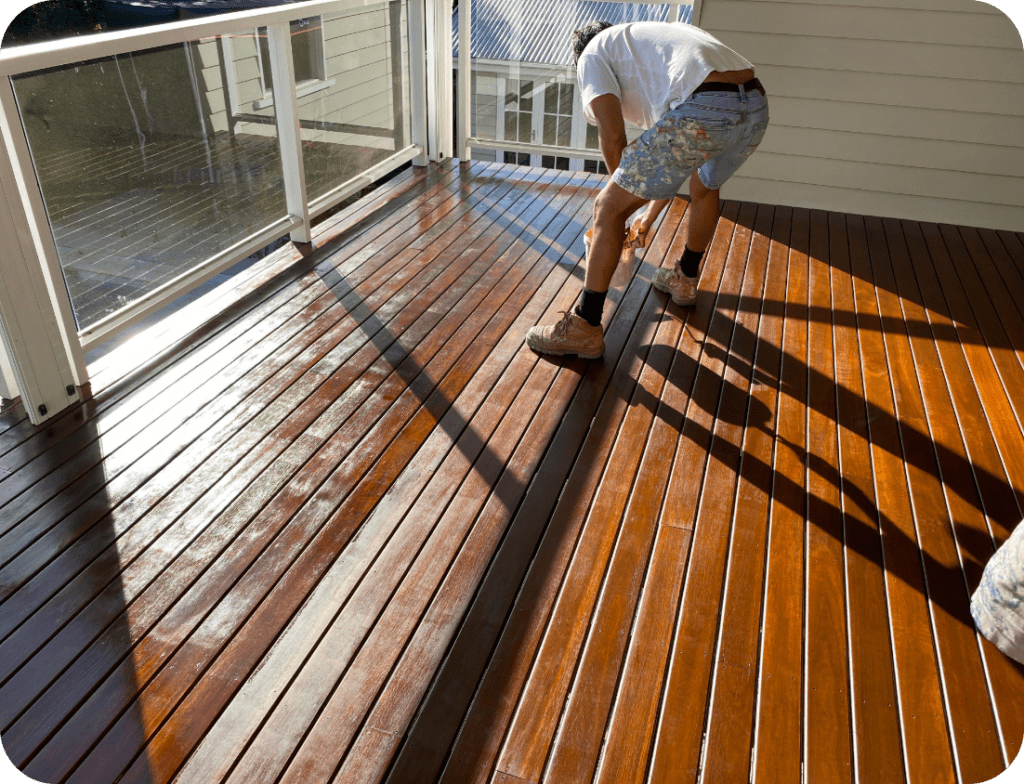

Many homeowners view their deck as they would an outdoor chair – something to clean every now and then, and to replace once it gets bad enough. This is the wrong mentality to have. Timber decking is a structural load-bearing element, and when the decay begins on the inside, no coating on the surface will be able to stop it.
How timber actually fails
Wood is composed of cellulose and lignin. Cellulose gives the fibers their strength, while lignin works as the bonding material between them. When wood is exposed to UV radiation, lignin is the first to get affected. This is referred to as “silvering”, which is that gray, weathered appearance that you can observe on a deck that has not been maintained. What is not visible to the naked eye is the network of micro-fissures that begin to form under the surface, as the fiber structure loses its unity.
Once these fissures are there, water is able to penetrate directly to the core of the board. Timber is hygroscopic, meaning it absorbs and releases moisture. This results in expansion and contraction of the material, eventually causing warping, cupping, and loose fasteners. In colder regions, the water remains inside the board and freezes during the winter, causing the wood to split from the center.
Moisture is also followed by fungal decay. Typically, rotting starts at the joints, end-grains, and wherever two board ends are close enough to each other to trap the water. By the time you discover soft patches or a change in color on the surface, the structural integrity of the wood has already been compromised and this often occurs over several years. Applying a surface treatment on decaying wood does not stop the decay, it just hides it.
The sub-structure problem
The boards you walk on aren’t what holds a deck together. The bearers and joists underneath do that work, and they’re exposed to the worst conditions: trapped humidity, no direct sun to dry them out, and contact with soil or post footings in many cases.
Pressure-treated pine is the standard for structural framing, and it does resist moisture better than untreated timber. But it’s not immune. Professional maintenance includes a sub-structure inspection – checking for soft spots, checking that joist hangers haven’t corroded, looking for signs of fungal growth at connection points. DIY maintenance almost never includes this step, because the sub-structure isn’t visible.
According to industry data, properly maintained timber structures can last over 40 years, whereas neglected external timber in high-exposure areas can show significant structural failure in as little as 7 to 10 years. That’s a 30-year gap – and it’s entirely determined by what happens during the maintenance window.
Why DIY cleaning makes the problem worse
Using a high-pressure washer, although it may seem that everything is very clean, is not the case. A wash with a high-PSI washer on wood doesn’t simply “clean” the surface – it actually removes a small amount of the softer summer wood, leaving the harder winter wood behind. The highly pressurized water also opens up the wood’s pores much larger than they are naturally and leaves the surface slightly furry. All in all, because of these factors, the deck absorbs more moisture and contaminants than it would have before.
Bleach-based cleaners create a different problem. They’re alkaline, and timber responds better to pH-neutral chemistry for prep work. Alkaline cleaners break down the wood fibers themselves, not just the biological matter growing on them. The wood looks brighter after treatment, but the surface has been chemically compromised before any protective coat goes on.
Both methods accelerate the decay cycle rather than interrupting it.
The sealing phase isn’t cosmetic
After a deck is properly cleaned, checked, and restored by sanding where necessary, the sealing step is what actually protects the investment. Oil-based coatings penetrate into the wood rather than filming over it, which means they work with the timber’s natural expansion and contraction rather than against it. Most water-based coatings simply film over the timber, meaning they fail to replace oil lost from the timber in sunlight and weather. A film-forming coat on a deck that moves seasonally will peel and crack, leaving the wood exposed.
A professional-grade Deck Seal acts as a sacrificial barrier. It takes the UV exposure and moisture contact so the timber underneath doesn’t have to. The seal needs renewing on a maintenance schedule, but that’s the point. A maintained seal costs a fraction of what board replacement costs, and board replacement costs a fraction of what full structural deck replacement costs.
Species like Merbau bring an additional consideration – tannins in the timber can bleed significantly if the wood isn’t properly prepped before sealing, causing staining that’s difficult to reverse. Getting the prep chemistry right matters.
The cost comparison is straightforward
Professional cleaning, inspections, sanding, and sealing come at a cost. Replacement costs a great deal more, often five to ten times as much, and will lead you there earlier than you should if you skip regular maintenance. Worst of all, if your deck fails as a structure under load, it becomes a legal issue, not a reno one.
Treating timber decking as a system that needs technical maintenance rather than occasional attention is what separates a deck that lasts four decades from one that’s failing at year ten.

Comments are closed.